
Glutathione.
Glutathione is an endogenous tripeptide (Glu-Cys-Gly) and cellular antioxidant. It is often described as the master cellular antioxidant. With the molecular formula C₁₀H₁₇N₃O₆S and a molecular weight...
Lab Verified
Clinical Grade
PMID Cited
Mechanism of Action.
Published preclinical research has characterized the following molecular pathways and receptor interactions for Glutathione.
Reactive Oxygen Species (ROS)
Published research demonstrates Glutathione modulates targeted signaling cascades within cell tissue models.
Glutathione Peroxidase Pathway
In cellular environments, Glutathione exhibits selective binding and corresponding pathway activation.
Clinical Literature
Research review on Glutathione molecular characterization.
Preclinical studies have characterized the molecular properties and receptor binding profiles of Glutathione in standardized assay systems.
Glutathione structure-activity relationship analysis.
Structure-activity relationship studies have examined the functional domains and binding characteristics of Glutathione in cell-free and cell-based systems.
Compound Data
| CAS Number | 70-18-8 |
|---|---|
| Molecular Formula | C10H17N3O6S |
| Molecular Weight | 307.32 g/mol |
| Sequence | Glu-Cys-Gly |
| Purity | ≥99% (HPLC verified) |
| Form | Lyophilized powder |
| Storage | −20°C · Lyophilized |
Glutathione Questions
What is Glutathione?
Glutathione is an endogenous tripeptide of glutamate, cysteine, and glycine (gamma-Glu-Cys-Gly). Evo Amino lists it with molecular formula C10H17N3O6S, a molecular weight of 307.3 g/mol, and CAS 70-18-8. It is supplied lyophilized as a research compound for in vitro use only. Not for human use.
What makes Glutathione's structure unusual?
The glutamate is linked to cysteine through its side-chain gamma-carboxyl group instead of the usual alpha-carboxyl peptide bond. That gamma linkage resists most cellular peptidases, and the free thiol on the cysteine residue is the reactive group behind glutathione's role as a redox buffer in cell culture research.
How is Glutathione used in laboratory research?
Laboratories use glutathione as a reference thiol in redox biology. The ratio of reduced (GSH) to oxidized (GSSG) glutathione is a standard readout of cellular oxidative state, and the compound is a substrate for glutathione S-transferases and glutathione peroxidases in enzymatic assays run in vitro.
What purity level does Evo Amino's Glutathione have?
Evo Amino supplies Glutathione at ≥99% purity, verified by third-party HPLC and mass spectrometry analysis. Certificates of Analysis are available upon request.
How is Glutathione supplied?
Glutathione is supplied as a lyophilized powder in sealed research-grade vials, intended for in vitro and laboratory research use only.
RESEARCH USE ONLY: This compound is intended exclusively for in vitro laboratory research. Not for human or veterinary use. Not intended to diagnose, treat, cure, or prevent any disease. Not evaluated by the FDA. Must be 21+ to purchase.
Related Compounds.
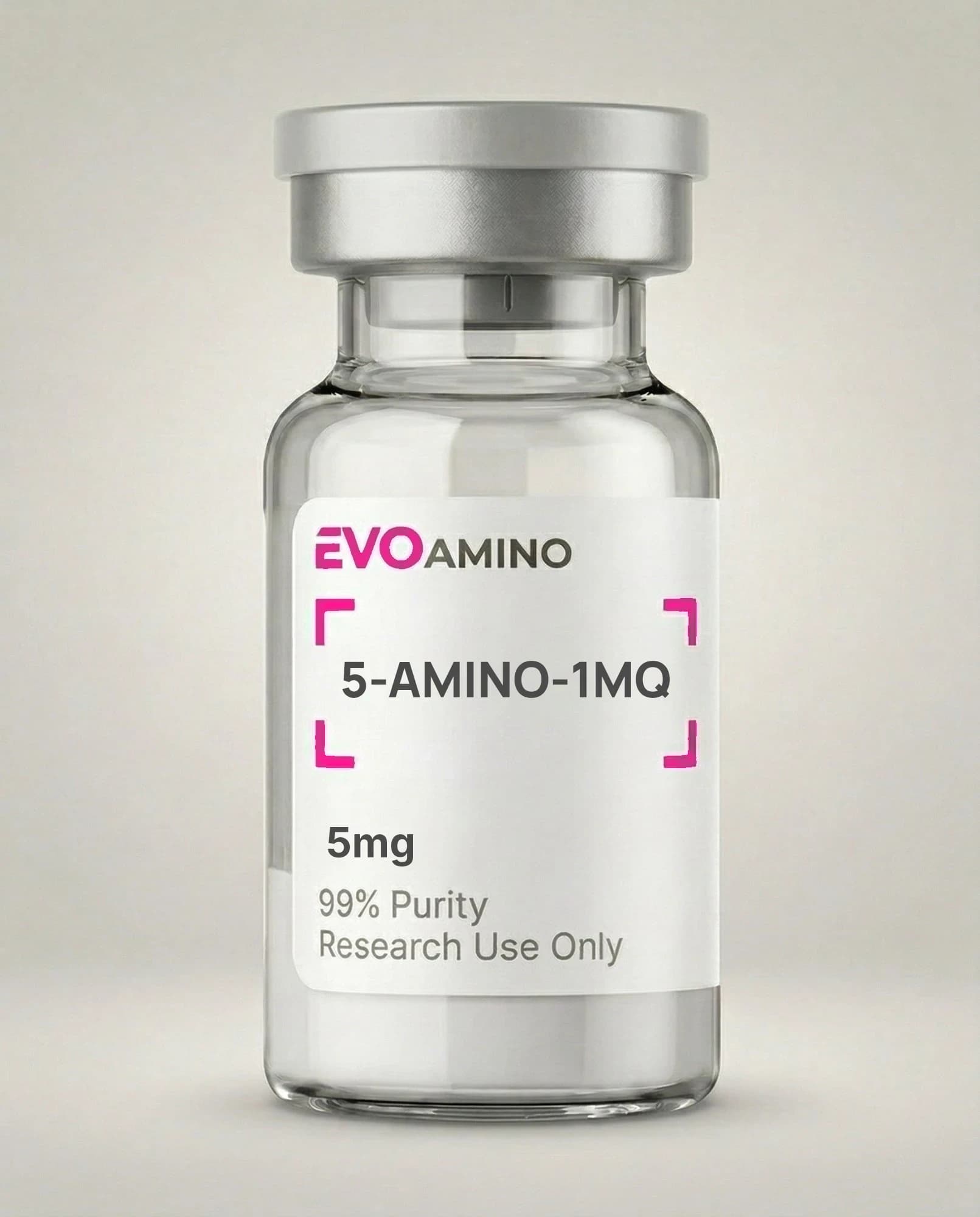 Metabolic
5-Amino-1MQ
$36.00C10H11N2 (free base) · 159.21 g/mol (free base)
For in vitro research use only. Not for human consumption.
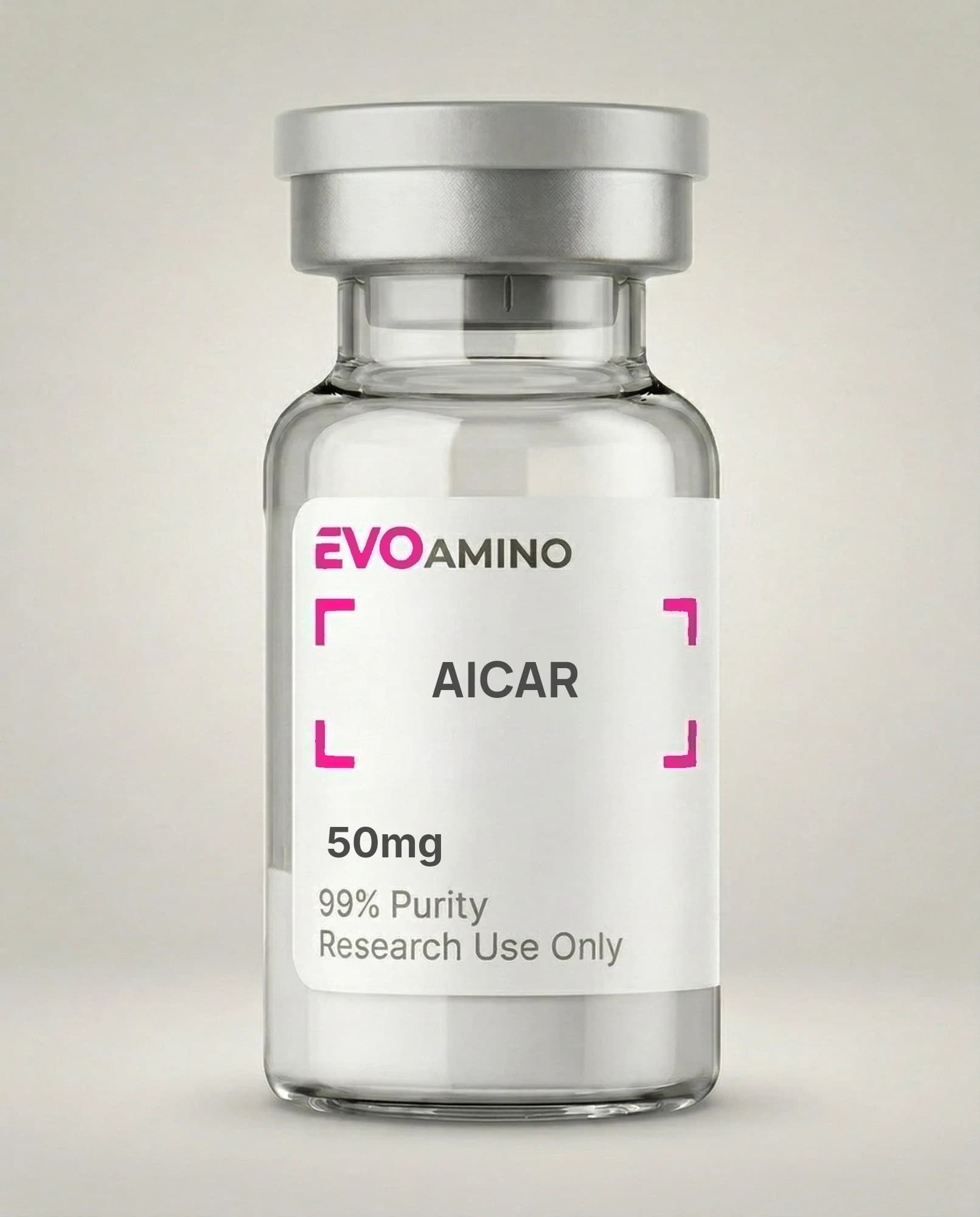 Metabolic
AICAR
$57.00C9H14N4O5 · 258.23 g/mol
For in vitro research use only. Not for human consumption.
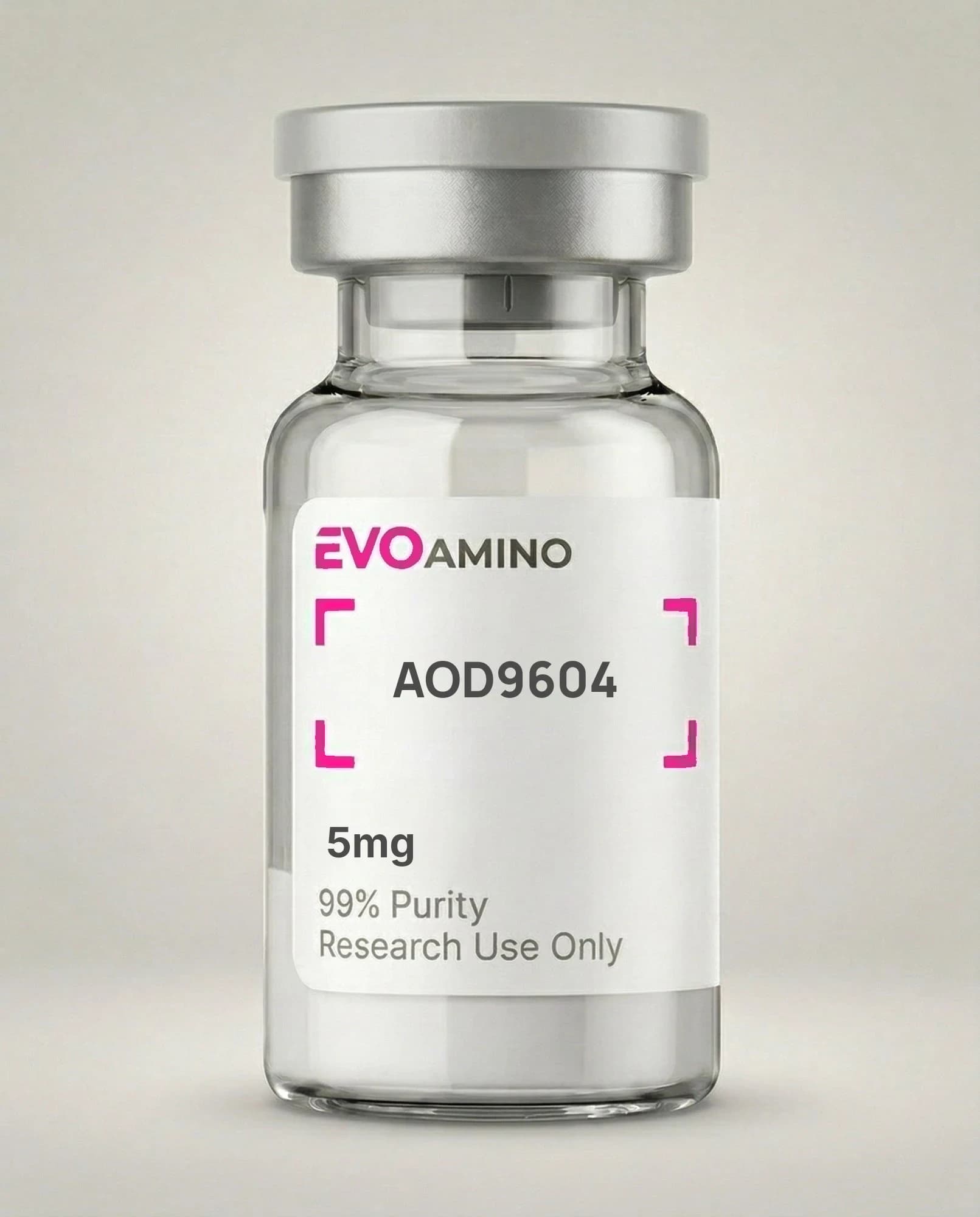 Metabolic
AOD9604
$48.00C78H123N23O23S2 · 1815.12 g/mol
For in vitro research use only. Not for human consumption.