* These statements have not been evaluated by the Food and Drug Administration. This product is not intended to diagnose, treat, cure, or prevent any disease. For research purposes only.
How do BPC-157 and GLP-1 differ as research compounds?
BPC-157 and GLP-1 are two of the most studied peptides in contemporary preclinical research, but they belong to entirely different molecular classes, engage unrelated receptor systems, and occupy distinct research contexts. Treating them as interchangeable or even directly comparable as drug-like agents misreads the literature. They are worth comparing precisely because the contrast is instructive — examining what separates them clarifies the mechanistic logic of each compound and helps investigators select the right tool for a given research question.
This guide runs the comparison across five dimensions: molecular class and origin, primary structure, mechanism of action, receptor biology, and documented in vitro research applications. The goal is a clear-eyed side-by-side that respects the genuine complexity of each compound without overstating overlap.
Molecular Class: Cytoprotective Pentadecapeptide vs Incretin Hormone
The most fundamental distinction between BPC-157 and GLP-1 is their molecular class.
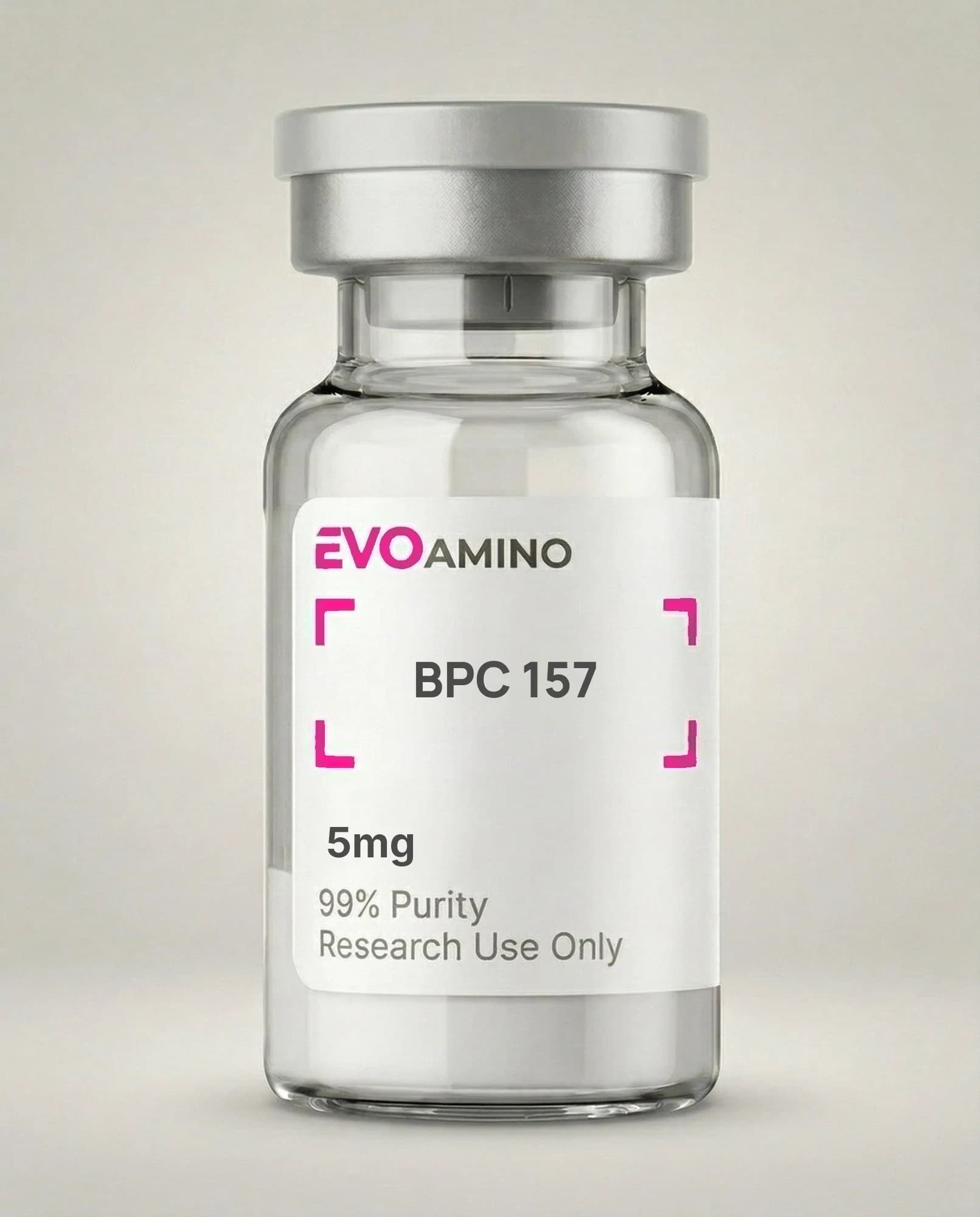
BPC-157 is a synthetic cytoprotective pentadecapeptide — a 15-amino acid linear peptide derived from a partial sequence of human gastric juice protein. Its origin is endogenous: it mirrors a protective fraction isolated from gastric mucosal tissue in the early 1990s. The "Body Protection Compound" designation encodes that discovery context directly. BPC-157 has no known receptor that has been fully characterized in the literature; its documented effects appear to be mediated through multi-pathway engagement — nitric oxide signaling, growth factor cascades, and neurotransmitter system interactions — rather than through a single defined binding site.
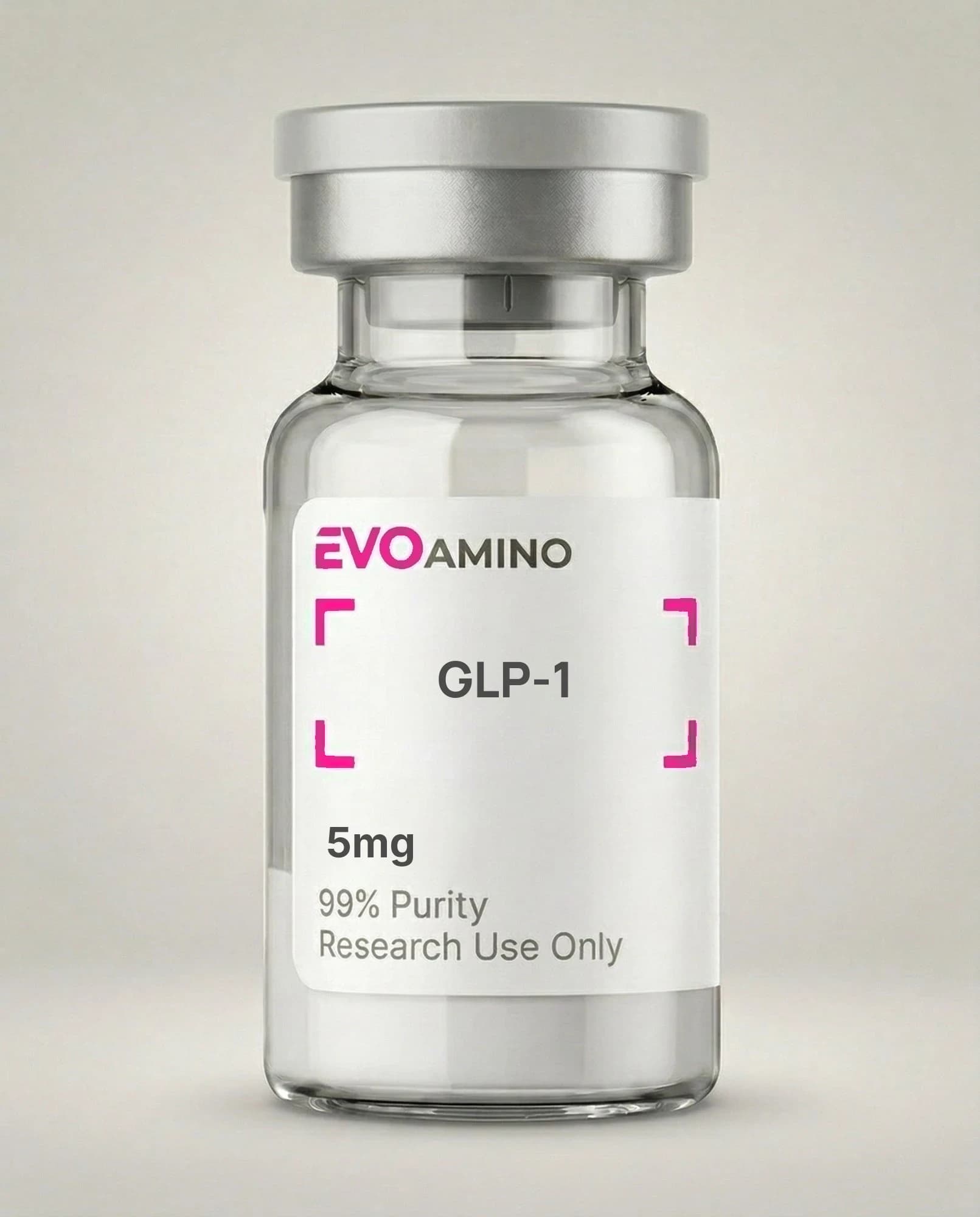
GLP-1 is an incretin hormone — a peptide secreted by intestinal L-cells in response to nutrient ingestion. It is not a synthetic research tool in its native form; it is an endogenous signaling molecule with a well-characterized receptor, a defined physiological role in glucose homeostasis, and a short circulating half-life of approximately one to two minutes. Research-grade GLP-1 analogs are structural modifications of the native sequence engineered to resist enzymatic degradation. The designation "glucagon-like peptide-1" reflects its genomic origin as a proglucagon cleavage product.
These are not two variants of the same thing. BPC-157 is a gastric-derived cytoprotective fragment studied primarily in tissue protection and multi-pathway signaling contexts. GLP-1 is an incretin with a canonical receptor and defined metabolic biology. The research questions they are suited to answer are correspondingly different.
Primary Structure: A 15-Mer vs a 30-Mer with Distinct Chemistry
The structural divergence between these two compounds is significant.
BPC-157 is a 15-residue linear peptide with the sequence Gly-Glu-Pro-Pro-Pro-Gly-Lys-Pro-Ala-Asp-Asp-Ala-Gly-Leu-Val (single-letter: GEPPPGKPADDAGLV). Molecular formula: C₆₂H₉₈N₁₆O₂₂. Molecular weight: 1419.53 g/mol. CAS number: 137525-51-0. The defining structural feature is the Pro-Pro-Pro triplet at positions 3–5, plus a fourth proline at position 8. This polyproline-rich segment imposes pronounced conformational rigidity along the backbone — a property that distinguishes BPC-157 from most short research peptides and likely contributes to its stability in biological media. No cysteine residues are present, so no disulfide bonds can form, simplifying synthesis and storage. Published NMR spectroscopy data indicate the peptide adopts a partially helical conformation in aqueous solution with flexible termini.
GLP-1 in its predominant research form — GLP-1(7-36)amide — is a 30-residue peptide with the sequence His-Ala-Glu-Gly-Thr-Phe-Thr-Ser-Asp-Val-Ser-Ser-Tyr-Leu-Glu-Gly-Gln-Ala-Ala-Lys-Glu-Phe-Ile-Ala-Trp-Leu-Val-Lys-Gly-Arg-NH₂. Molecular formula: C₁₄₉H₂₂₆N₄₀O₄₅. Molecular weight: 3297.7 Da. The peptide is more than twice the size of BPC-157 and carries a C-terminal amide group. Published NMR and crystallographic studies show GLP-1 adopts an alpha-helical conformation in membrane-mimetic environments, particularly in the C-terminal region. This helical structure is essential for receptor binding. The histidine at position 7 is critical for biological activity; the Ala8-Glu9 bond is the DPP-4 cleavage site responsible for the compound's rapid in vivo degradation — a vulnerability that drives the extensive analog development documented in published structure-activity relationship literature.
At the structural level, then: BPC-157 is a small, rigid, proline-constrained peptide with no defined receptor binding pharmacophore yet characterized; GLP-1 is a larger, helix-forming peptide with a precisely mapped receptor binding pose and well-understood pharmacophore geometry.
Mechanism of Action: Multi-Pathway Cytoprotection vs Single-Receptor Incretin Signaling
The mechanistic divergence follows directly from the structural differences.
BPC-157 does not have a single characterized receptor target. Published in vitro work describes effects distributed across several systems simultaneously. The nitric oxide pathway is the most extensively characterized: endothelial cell culture studies document effects on endothelial nitric oxide synthase (eNOS) activity and downstream cGMP production. Growth factor signaling represents a second documented axis — VEGF expression, FGF-2 receptor activity, and EGF receptor phosphorylation have all been characterized in fibroblast, endothelial, and epithelial cell culture models. GABAergic and dopaminergic neurotransmitter systems are affected in neuronal cultures. Oxidative stress response pathways — including antioxidant enzyme expression and heat shock protein levels — show sensitivity to BPC-157 in cellular stress models. The mechanistic breadth is a feature of the compound's research profile, not a gap in characterization: published reviews consistently treat the multi-pathway engagement as the mechanistic signature of BPC-157 rather than an artifact of incomplete data.
GLP-1 acts through a well-defined receptor — the GLP-1 receptor (GLP-1R), a class B G-protein coupled receptor (GPCR). Receptor activation is initiated when GLP-1 binds the extracellular N-terminal domain and transmembrane regions of GLP-1R, triggering Gs-protein coupling. Activated Gs stimulates adenylate cyclase, elevating intracellular cyclic AMP. Downstream, cAMP activates protein kinase A and the exchange protein activated by cAMP (Epac), which phosphorylate voltage-gated calcium channels and mobilize intracellular calcium stores. In pancreatic beta cell models, this cascade drives glucose-dependent insulin secretion. Published BRET and FRET assays characterize the receptor conformational changes in real time, and confocal microscopy studies document receptor internalization via clathrin-mediated endocytosis following agonist binding. Signaling bias — the differential preference of different agonists for cAMP versus beta-arrestin recruitment — is a documented feature of GLP-1R pharmacology with active research interest.
Mechanistically, BPC-157 is a distributed multi-pathway modulator with no single receptor; GLP-1 is a precision GPCR agonist with a defined receptor, a characterized signal transduction cascade, and a well-mapped internalization pathway.
Receptor Biology: Uncharacterized vs Class B GPCR Pharmacology
This distinction deserves its own section because the receptor biology shapes what kinds of research questions each compound can answer.
BPC-157's receptor has not been fully identified and characterized in published literature. This is not a criticism — it is simply the current state of the science. The compound produces reproducible and mechanistically informative effects in cell culture models, but the upstream receptor (or receptors) responsible for initiating those effects remain an active area of investigation. This positions BPC-157 as a tool for studying downstream pathway effects and cytoprotective mechanisms rather than for interrogating specific receptor pharmacology.
GLP-1R is among the more structurally characterized GPCRs in published literature. Cryo-electron microscopy and X-ray crystallography studies have resolved receptor-ligand complexes at near-atomic resolution, mapping the binding poses of native GLP-1 and multiple analogs. Radioligand binding assays, fluorescence polarization, and surface plasmon resonance approaches have been extensively published for characterizing agonist affinity and receptor occupancy. The pharmacological toolkit for GLP-1R is sophisticated, including pathway-selective assays that discriminate cAMP signaling from beta-arrestin recruitment, and fluorescent ligands that enable real-time receptor trafficking visualization. For investigators interested in GPCR pharmacology, receptor internalization biology, or metabolic signaling, GLP-1R provides a research context that BPC-157's uncharacterized receptor binding cannot.
Research Applications: Where They Overlap and Where They Diverge
Given the mechanistic and receptor-level differences, the in vitro research application spaces for BPC-157 and GLP-1 are largely non-overlapping — with a narrow zone of potential intersection.
BPC-157 research applications documented in published literature include gastric mucosal biology (epithelial protection models), wound healing and connective tissue biology (fibroblast and tendon cell culture systems), vascular biology and angiogenesis (endothelial cell and VEGF pathway studies), neuronal stress response models, and multi-pathway cytoprotection investigations. The compound's value is its multi-system engagement — investigators studying crosstalk between NO signaling, growth factor cascades, and oxidative stress pathways find BPC-157 a useful perturbation tool.
GLP-1 research applications documented in published literature include pancreatic beta cell biology (glucose-stimulated insulin secretion in islet preparations and beta cell lines), GPCR pharmacology (receptor binding assays, internalization kinetics, signaling bias characterization), incretin pathway biology, metabolic signaling research, and neuroscience applications exploring GLP-1R expression in brain regions. The compound's value is its receptor specificity and the depth of pharmacological characterization available.
The narrow overlap zone is in neuroscience: both compounds have documented effects in neuronal systems, and both appear in neuroprotection-adjacent research contexts. GLP-1R expression in brain regions is an area of active published investigation, and BPC-157's GABAergic and dopaminergic pathway effects create some thematic adjacency. But the mechanistic routes are distinct — GLP-1's brain effects flow through GLP-1R-expressing neurons and characterized cAMP cascades; BPC-157's neuronal effects are mediated through neurotransmitter synthesis and receptor modulation without a shared receptor anchor point.
For most experimental designs, these two compounds address different scientific questions and belong in separate research programs, not the same protocol.
All compounds discussed in this article — including BPC-157 and GLP-1 — are available from Evo Amino exclusively for in vitro laboratory research purposes. Neither compound is approved for human or animal use, and nothing in this article constitutes a therapeutic claim, dosing guidance, or medical recommendation. All findings cited above derive from published in vitro and preclinical literature. Investigators should review current published literature and consult institutional compliance requirements before initiating any research protocol. For research purposes only.
Stay in the loop
New compounds, research updates & exclusive subscriber deals.