* These statements have not been evaluated by the Food and Drug Administration. This product is not intended to diagnose, treat, cure, or prevent any disease. For research purposes only.
GH secretagogue peptides divide into two mechanistically distinct receptor classes: GHRH analogs that activate growth hormone-releasing hormone receptors (GHRH-R) on pituitary somatotrophs, and ghrelin receptor agonists that activate GHS-R1a. CJC-1295, Sermorelin, and Tesamorelin belong to the GHRH analog class; Ipamorelin belongs to the ghrelin receptor class. Published research characterizes both receptor types as G-protein coupled receptors that stimulate distinct intracellular cascades upon activation. GHRH receptor engagement drives cAMP production through Gs-protein coupling and adenylate cyclase stimulation, increasing growth hormone synthesis and secretion through PKA-dependent downstream events. Ghrelin receptor activation uses a different primary mechanism: phospholipase C signaling, IP3 generation, and intracellular calcium mobilization. These mechanistic differences between the two classes — same downstream outcome (GH secretion), different upstream signaling — make them complementary rather than interchangeable research tools. Pituitary cell cultures and animal models have been the primary systems for characterizing both receptor classes. These peptides function as pharmacological research instruments for studying endocrine signaling and growth hormone regulation, not as therapeutic agents.
How do CJC-1295 variants differ?
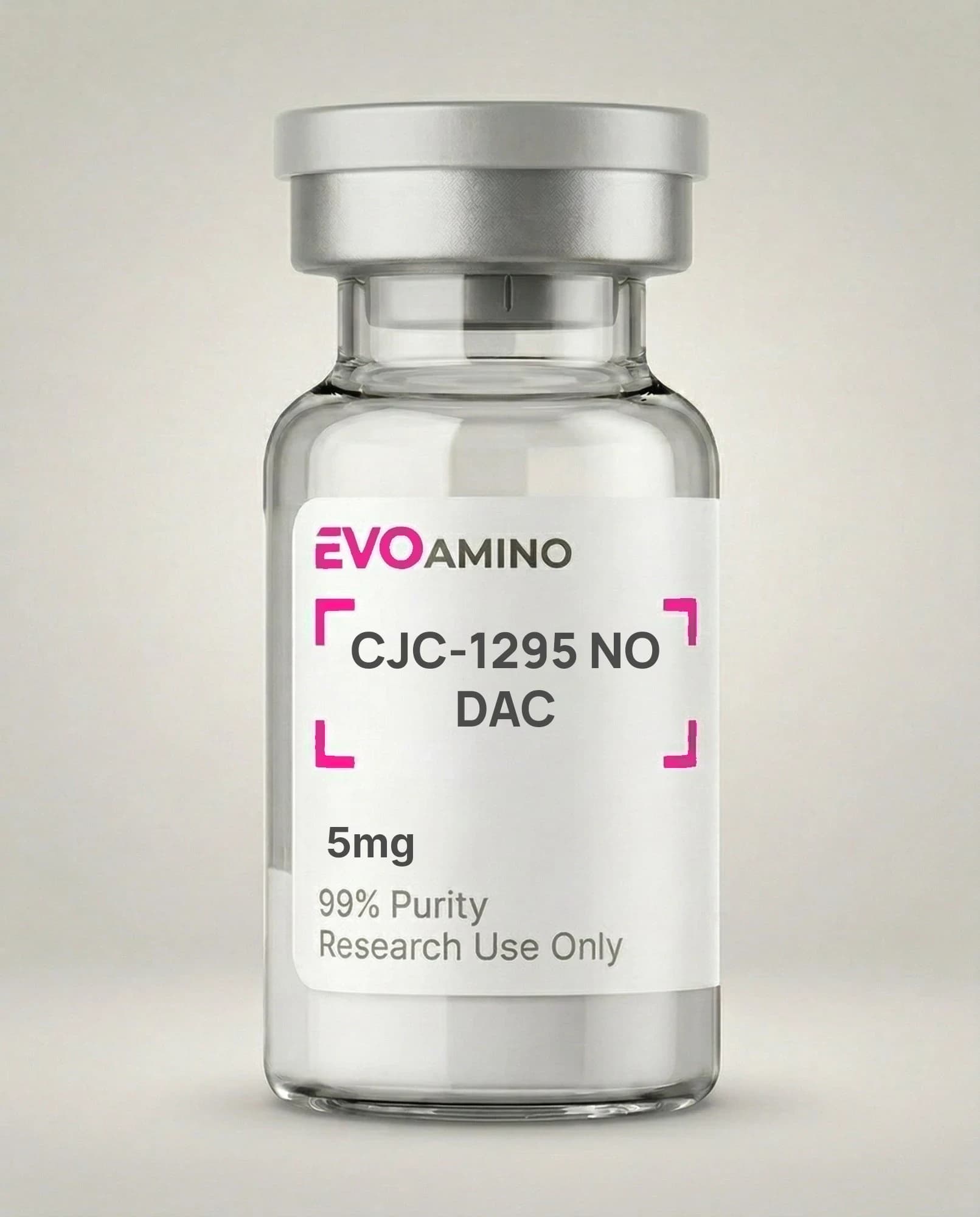
CJC-1295 exists in two pharmacokinetically distinct forms built on the same peptide backbone. CJC-1295 without DAC — also called Modified GRF (1-29) — is a 29-amino acid GHRH analog incorporating substitutions at positions 2, 8, 15, 16, 23, 24, and 28. These amino acid substitutions reduce susceptibility to proteolytic degradation and DPP-IV cleavage, substantially extending half-life compared to native GHRH while preserving receptor binding geometry. CJC-1295 with DAC incorporates the same modified peptide sequence plus a Drug Affinity Complex moiety — a reactive group that covalently bonds to lysine residues on circulating albumin after administration, creating an albumin-bound peptide depot. The albumin binding extends terminal half-life further and slows release of active peptide. Published pharmacokinetic studies characterize the DAC version as producing more sustained but lower-peak receptor activation compared to the non-DAC form. Both forms converge on the same GHRH receptor activation mechanism — increased cAMP, PKA activation, and GH secretion. Research application selection between the two forms turns on whether the experimental design requires short-duration, higher-peak activation (non-DAC) or extended low-level receptor stimulation (DAC). Both require HPLC purity verification and mass spectrometry identity confirmation before experimental use.
What is the molecular structure of Ipamorelin?
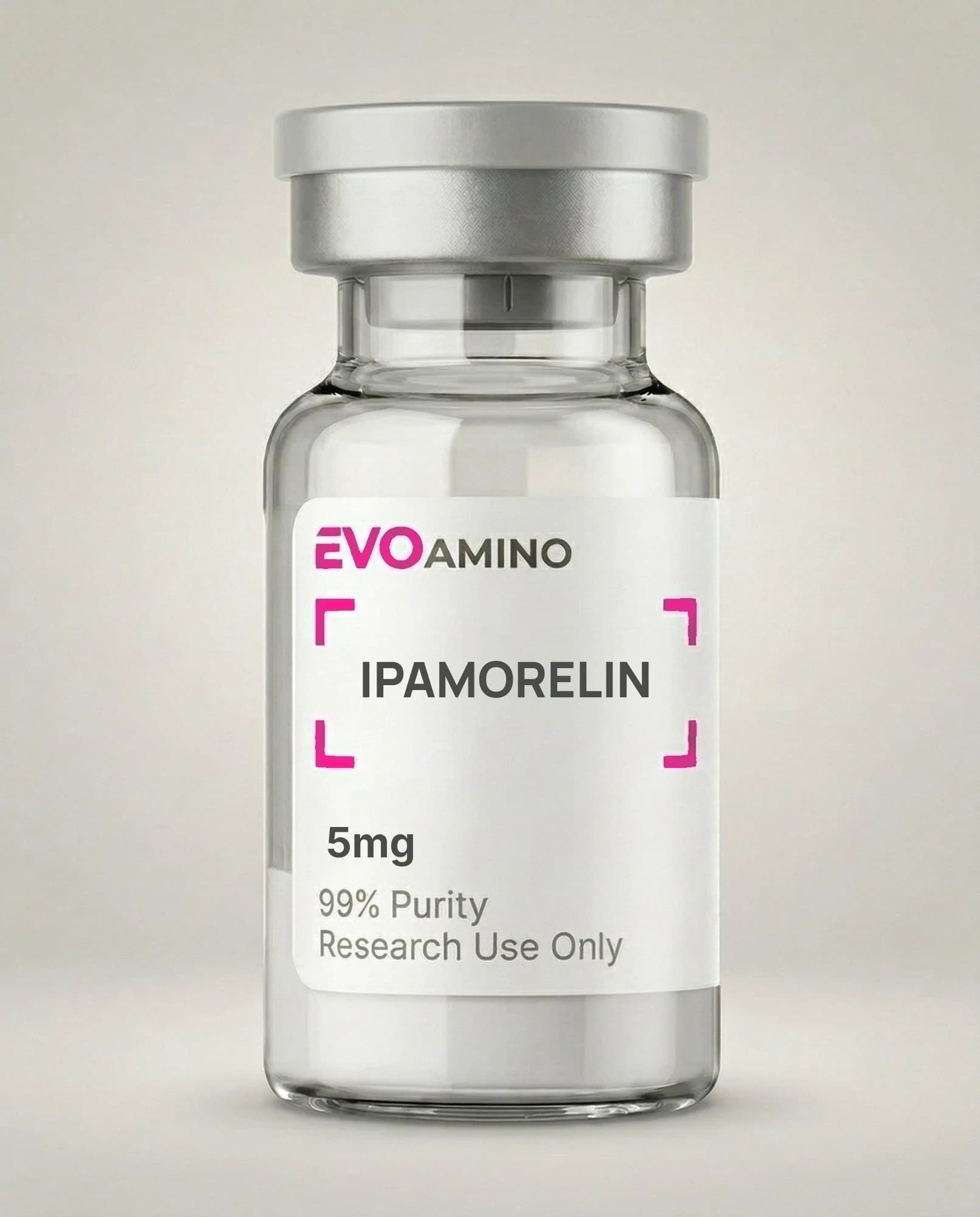
Ipamorelin is a synthetic pentapeptide with the sequence Aib-His-D-2-Nal-D-Phe-Lys-NH2, where Aib is aminoisobutyric acid and D-2-Nal is D-2-naphthylalanine. Published research establishes the molecular formula as C₃₈H₄₉N₉O₅ with molecular weight 711.9 g/mol. The structural design incorporates D-amino acid residues at the D-2-Nal and D-Phe positions, conferring proteolytic resistance by disrupting recognition by endogenous peptidases that require L-amino acid substrates. C-terminal amidation provides additional stability at the peptide terminus. The key pharmacological feature of Ipamorelin is receptor selectivity: published binding studies document high affinity at GHS-R1a with minimal cross-reactivity at other pituitary hormone receptor systems including ACTH, prolactin, and cortisol pathways. This selectivity distinguishes Ipamorelin from older, non-selective GHRP compounds that show off-target activity at multiple receptor systems, complicating mechanistic interpretation. The structural basis for this selectivity lies in how Ipamorelin's aromatic side chains interact with the GHS-R1a binding pocket in a geometry that does not accommodate the receptor-interaction geometries of non-target pituitary receptors. The synthetic pentapeptide format enables production through solid-phase synthesis with the purity specifications required for receptor pharmacology research.
How does Sermorelin differ from native GHRH?
Sermorelin is a synthetic 29-amino acid peptide representing the biologically active N-terminal fragment of human GHRH. The sequence corresponds to GHRH(1-29)NH2 — Tyr-Ala-Asp-Ala-Ile-Phe-Thr-Asn-Ser-Tyr-Arg-Lys-Val-Leu-Gly-Gln-Leu-Ser-Ala-Arg-Lys-Leu-Leu-Gln-Asp-Ile-Met-Ser-Arg-NH2 — with a molecular weight of 3357.9 g/mol for the acetate salt. Native GHRH is a 44-amino acid peptide; the first 29 residues carry the full receptor-binding and activation activity, while residues 30–44 contribute primarily to metabolic stability and clearance profile rather than receptor engagement or cAMP signaling. Sermorelin retains the native GHRH(1-29) sequence without any of the amino acid substitutions found in modified analogs like CJC-1295. This makes Sermorelin the closest structural reference to native GHRH among synthetic GH secretagogues available for research use. Published receptor binding studies confirm that Sermorelin activates GHRH receptors through the same Gs-protein coupled mechanism as native GHRH, stimulating adenylate cyclase and elevating cAMP in pituitary cell cultures. The shorter sequence results in a more rapid metabolic handling profile than full-length native GHRH, which is relevant to experimental designs requiring defined pharmacokinetic windows.
What modifications does Tesamorelin contain?
Tesamorelin is a GHRH analog built on the native GHRH(1-44) sequence — the full-length peptide — with a single trans-3-hexenoyl group covalently attached to the N-terminal tyrosine at position 1. Published research reports a molecular weight of 5135.9 g/mol for this modified form. The hexenoyl modification introduces lipophilicity at the N-terminus, reducing renal clearance and decreasing proteolytic susceptibility compared to native GHRH without requiring internal sequence substitutions. This distinguishes Tesamorelin from CJC-1295 mechanistically: CJC-1295 achieves stability through multiple amino acid substitutions scattered throughout the sequence, while Tesamorelin achieves stability through a single N-terminal lipid modification on the otherwise native sequence. Published pharmacokinetic studies confirm that the hexenoyl group extends half-life while preserving receptor binding affinity and GHRH receptor selectivity. The extended half-life derives from reduced clearance rather than altered receptor pharmacology — a distinction relevant for interpreting receptor kinetics in experimental designs. Published binding studies confirm Gs-protein coupling and adenylate cyclase stimulation with similar potency to native GHRH. Tesamorelin is used in research applications investigating sustained GHRH receptor activation and its downstream consequences in pituitary and growth factor signaling models.
How Do GH Secretagogue Peptides Compare in Molecular Properties?
Feature
CJC-1295 NO DAC (Mod GRF 1-29)
CJC-1295 DAC
Ipamorelin
Sermorelin
Tesamorelin
Amino Acids
29
29
5
29
44
Molecular Weight
3367.9 Da
3647.4 Da
711.9 Da
3357.9 Da
5135.9 Da
CAS Number
446036-97-1
863288-34-0
170851-70-4
86168-78-7
218949-48-5
Receptor
GHRH-R
GHRH-R
GHS-R1a
GHRH-R
GHRH-R
Selectivity
GHRH selective
GHRH selective
GH selective
GHRH selective
GHRH selective
Key Modification
Sequence substitutions
DAC albumin binding
D-amino acids
Native sequence
Hexenoyl group
Mechanism
cAMP/PKA
cAMP/PKA
PLC/Ca2+
cAMP/PKA
cAMP/PKA
Primary PMID
15775957
16452336
10698741
8421207
19928588
FAQ
What concentration is used for GHRH receptor research?
Published in vitro studies typically use 1-100 nM concentrations for GHRH receptor activation in pituitary cell cultures. Higher concentrations (100-1000 nM) may be used for receptor internalization or binding studies. Always verify receptor expression in your cell model.
Do GH secretagogues require GHRH for activity?
Published research demonstrates that GH secretagogues including Ipamorelin stimulate GH release in the absence of GHRH, though synergistic effects may occur with combined administration. Ghrelin receptor agonists act through distinct mechanisms from GHRH analogs.
What cell lines express GHRH receptors?
Published studies use primary pituitary cells, AtT-20 pituitary tumor cells, and HEK293 cells transfected with GHRH receptors. Verify receptor expression through binding assays or qPCR before experimental use.
How stable are these peptides in culture media?
Peptide stability varies by structure and media composition. Published studies typically use fresh preparations or include protease inhibitors. CJC-1295 analogs with sequence modifications show enhanced stability compared to native GHRH sequences.
Can these peptides be used in combination?
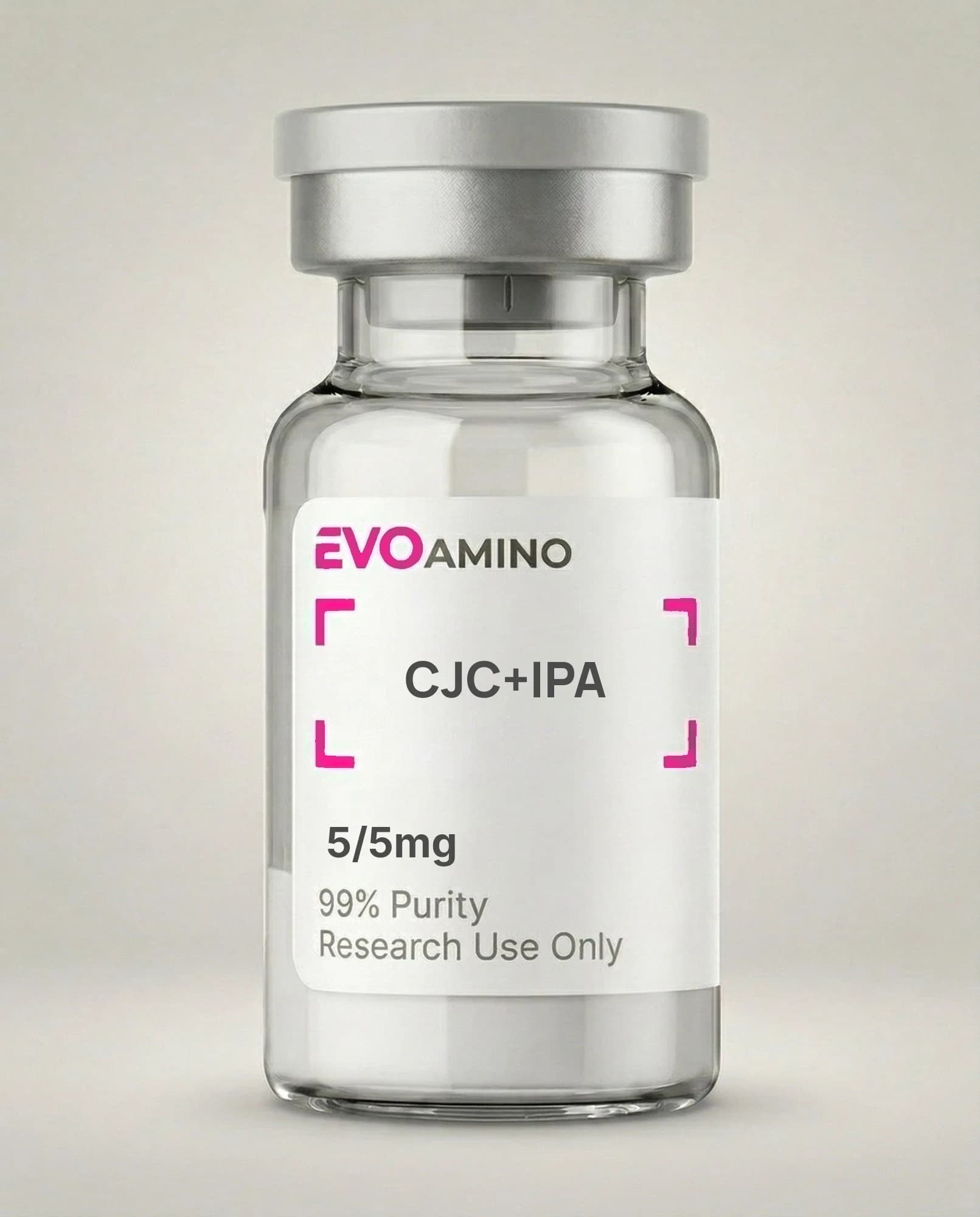
Published research demonstrates that GH secretagogues and GHRH analogs can be combined, with potential synergistic effects on GH release. Design experiments with appropriate controls to isolate individual compound effects.
Research Use Only: All compounds sold by Evo Amino are intended exclusively for laboratory research. Not for human or animal consumption. These products are not drugs, supplements, or food. Statements have not been evaluated by the FDA. Must be 21+ to purchase.
Stay in the loop
New compounds, research updates & exclusive subscriber deals.